
At Tekaroid, we are lovers of the night. And not only that night. Not just bars with party and music before the long walk home filled with questionable life choices. We also mean the other night: the one that begins when the city stops performing. The quieter hours, when urban life lowers its voice. This analysis is meant to provoke reflection.
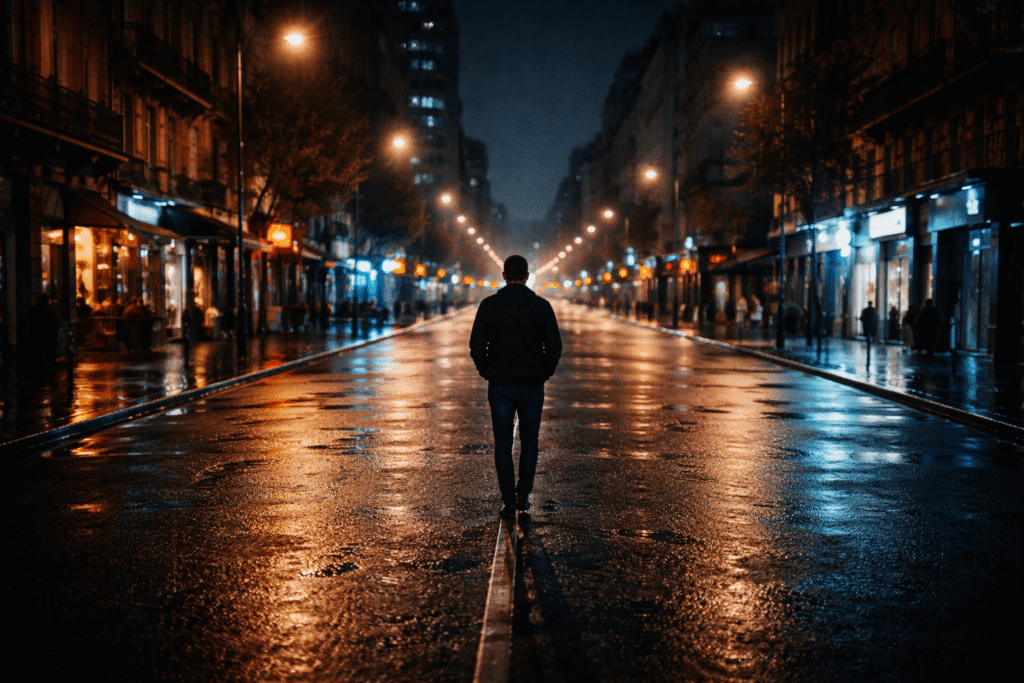
Cities do not physically change when the sun goes down. Streets stay in place. Buildings remain exactly where they were. Infrastructure keeps working. And yet, the experience of being in a city at night feels fundamentally different, almost like stepping into a parallel version of the same place.
We searched for scientific studies that had specifically examined the sensation of walking at night through the empty streets of your neighbourhood, town, or city. But there is no research that directly focuses on this precise experience. Other studies analyse similar aspects like safety, lighting, or behaviour after dark, the quiet, subjective feeling of moving through familiar places once they have emptied remains largely unexplored.
During the day, cities function with remarkable precision. This is not accidental, over decades, urban life has been organised around productivity, visibility and speed. The city works because it demands participation. You are expected to adapt to its rhythm, not the other way around.
The people you encounter at night reinforce this sense of a different city. These are not the crowds of the daytime. They are individuals moving through transition. Some are returning home after long shifts, carrying physical exhaustion but mental relief. Others are just beginning their workday, like for example, cleaners, hospital staff, hospitality workers that finished their shift or going to start, delivery drivers and those that support the live of the city. The night belongs to those who keep the city alive when it is no longer visible.
What the night quietly removes
Shops close their doors. Offices empty. Cafés return to being cafés instead of temporary offices. Pavements no longer feel congested, there is no need to dodge other people, and in many cases you can cross the street without even looking for a pedestrian crossing. The city sheds its daytime instructions and reveals its bare structure.
Social pressure fades. You no longer need to justify why you are walking, cycling, or simply existing in a particular place. Streets feel less judgmental. Time stretches. The city becomes less about purpose and more about presence.
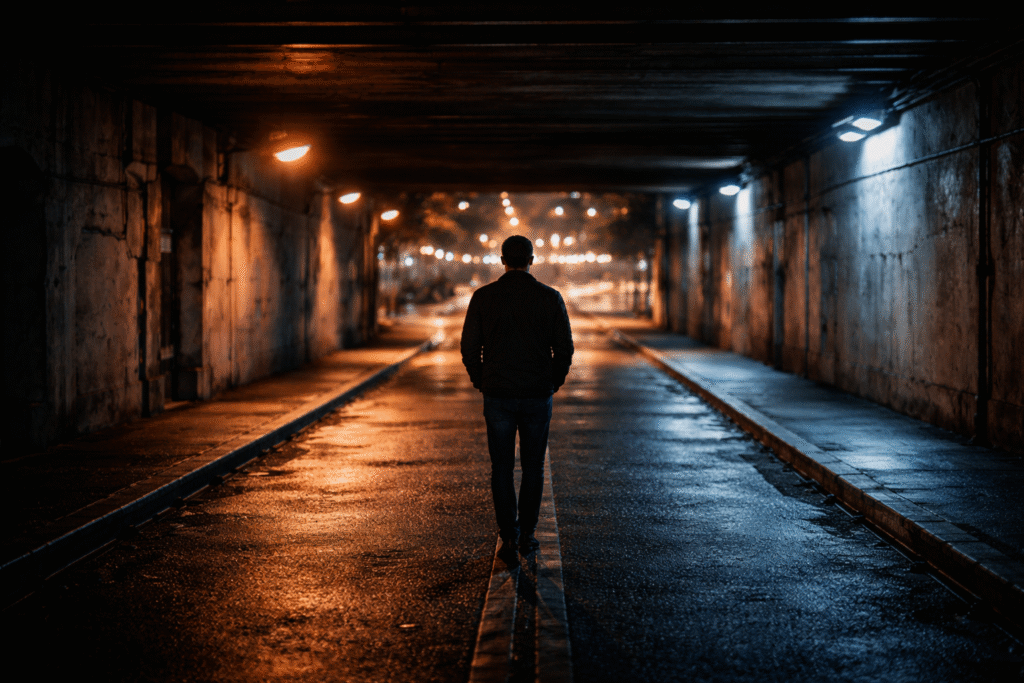
Reduced visibility, increased clarity
When no one is watching, movement becomes intentional. Walking has no audience. Cycling feels personal rather than competitive. You move because you choose to, not because the city is pushing you forward. And, of course, reduced visibility changes behaviour. The same streets that feel aggressive during rush hour suddenly feel calm. Traffic lights blink patiently. Sound travels differently. The city stops demanding attention and starts offering space.
Solitude without emptiness
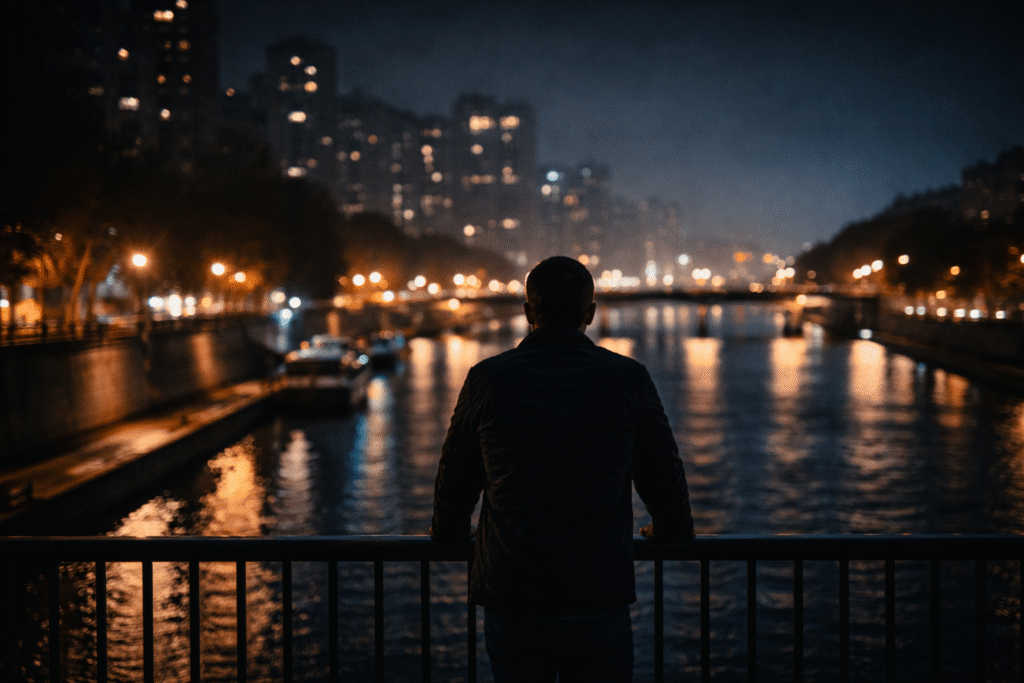
Being alone in a quiet city does not automatically feel lonely. It creates mental breathing room. Without constant stimulation, thoughts settle. Emotions surface without interruption. Stress becomes clearer, easier to understand. There is no feed to scroll, no schedule to chase, no immediate reward system pulling focus away. Just movement, light, and thought.
From Tekaroid, we would recommend a night walk as a way to clear the mind, release stress, and reflect on how life is unfolding. It is a moment to look back at where we have been, in order to better understand where we want to go next. And if you, dear reader, are not particularly inclined towards reflection, we still suggest stepping outside after dark simply to see the city from a different angle. Because, speaking personally, cities often look their best at night, offering a different reality
A cinematic atmosphere
For some of us, this relationship with the night may have started in a cinema. Let us admit it.
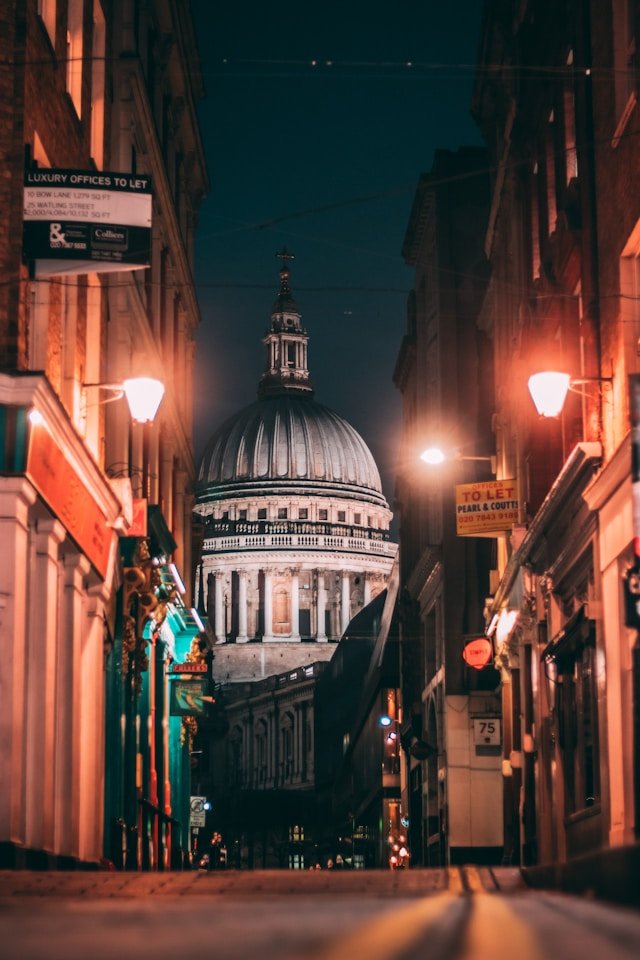
Those images, for example, of Gotham. Empty streets with wet asphalt reflecting streetlights. A city stripped of normal life, where only few criminals, random workers, and silence remained. The dark night moving through a city that felt dangerous but deeply intimate. Visually, it was powerful. Emotionally, it stayed with you. It suggested that cities reveal their true character when the crowd disappears.
What the night reveals about our cities
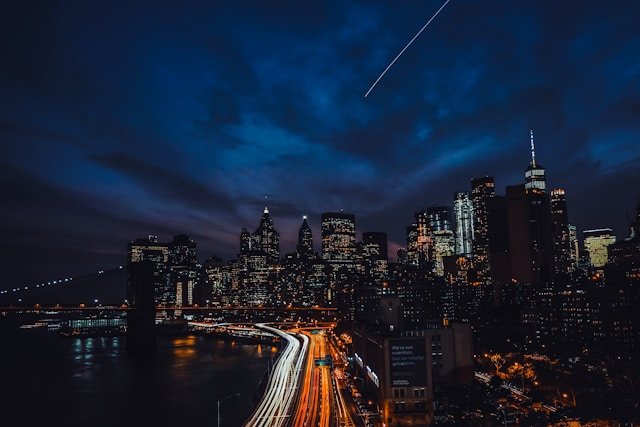
If cities feel more human at night, the question is not what darkness adds, but what daylight removes. Daytime urban life is organised around constant activation. Presence is tolerated as long as it serves a function. When that logic dominates, calm becomes an exception rather than a baseline.
Night interrupts this order. Not by redesigning the city, but by temporarily suspending its rules. Streets stop asking for productivity. Space becomes neutral again. And in that pause, something quietly unsettling emerges: the city feels more liveable when it asks less from the people inside it.
What the night reveals about our cities
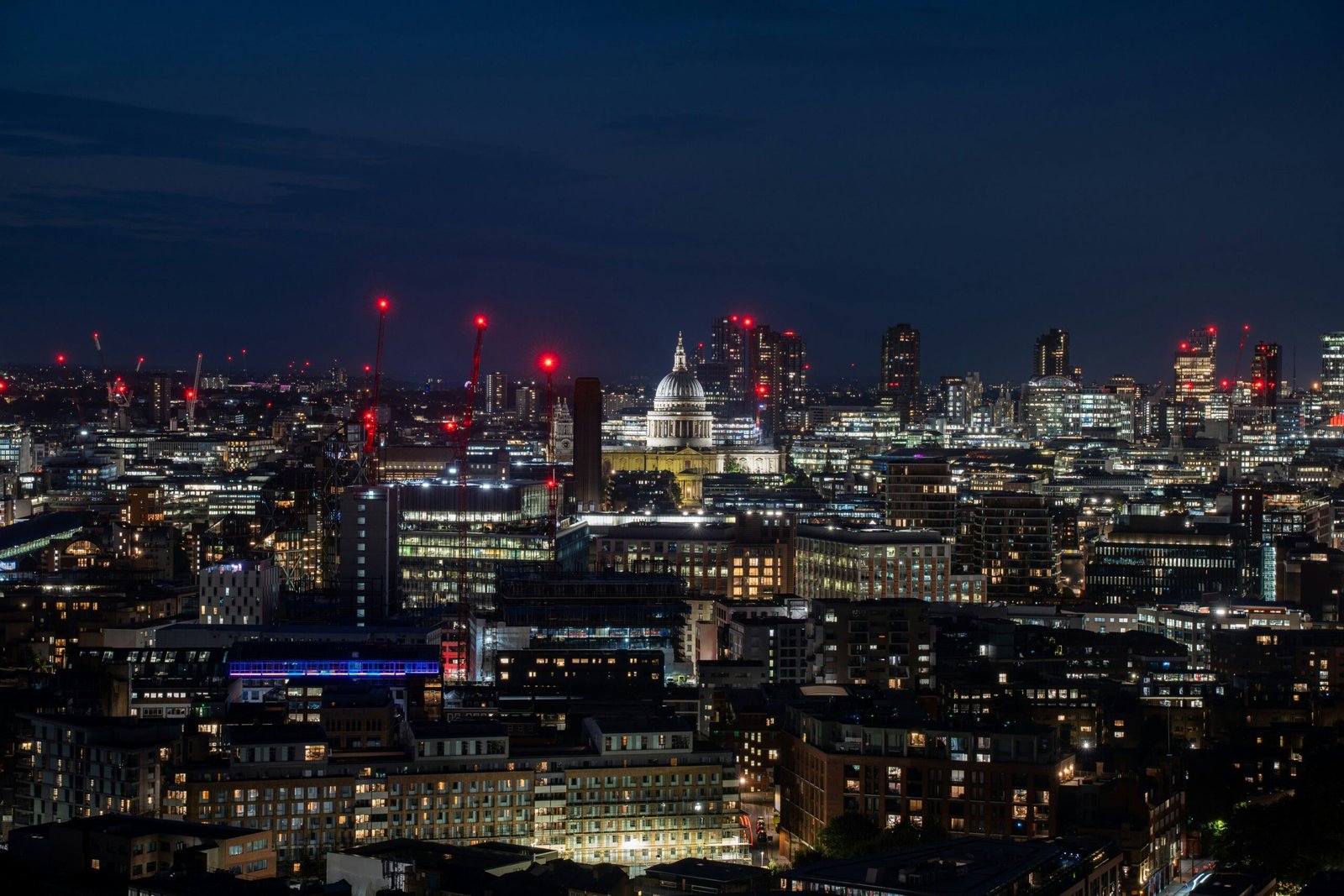
If cities feel more human at night, the question is not what darkness adds, but what daylight removes. Daytime urban life is organised around constant activation. Presence is tolerated as long as it serves a function. When that logic dominates, calm becomes an exception rather than a baseline.
Night interrupts this order. Not by redesigning the city, but by temporarily suspending its rules. Streets stop asking for productivity. Space becomes neutral again. And in that pause, something quietly unsettling emerges: the city feels more liveable when it asks less from the people inside it.
The night does not reveal a hidden city, but a simpler one. And once you experience it, it becomes harder to accept that comfort, clarity, and emotional balance only appear after the system powers down. The city does not change at night. Our relationship with it does.
