With digital advances, it is becoming less and less necessary to move our bodies to get through the day. Most days can pass without us having to make any real effort. At Tekaroid, we want to look at how this change could be affecting ambition, discipline and, in many cases, economic progress.
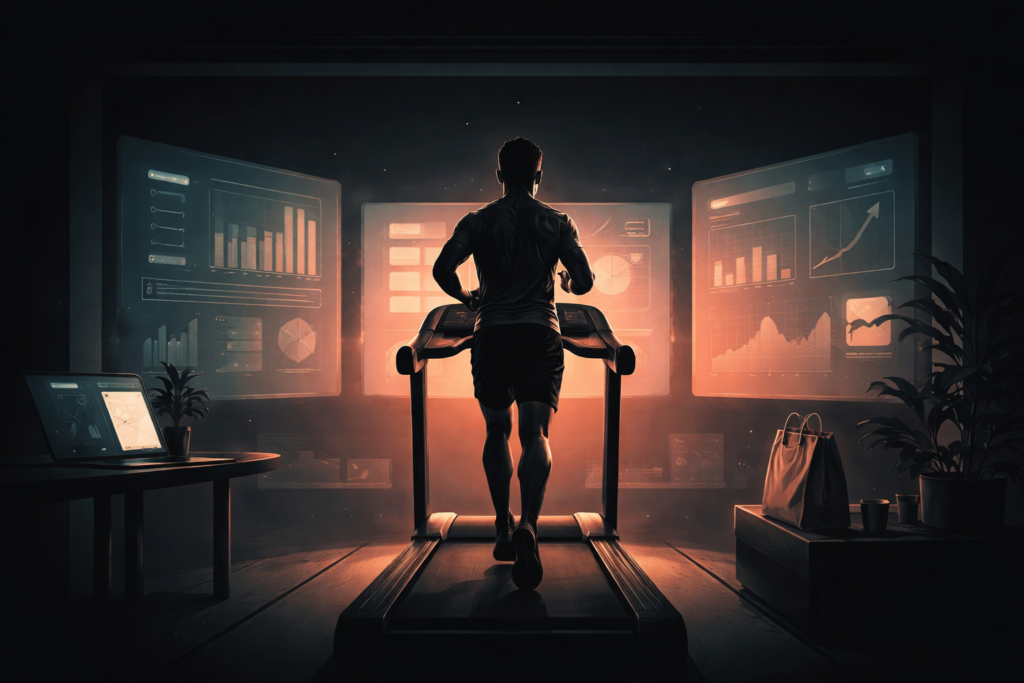
Outside of hospitality and construction, most jobs no longer require physical strength. Most forms of discomfort can now be avoided with a tap on a screen to order groceries or transport, even if you are tired or not in the mood, you do not have to cook. Life has become efficient, and efficiency has reduced physical effort. That sounds like progress, and in many ways it is. But there is a side effect we rarely talk about: When effort becomes optional, discipline becomes rare, and it is well known that when you do not use discipline, it slowly disappears.
The erosion of discipline
Most people already know what discipline is, at least in theory. We all understand the idea of showing up, repeating effort, sticking to something. And while at Tekaroid we love explaining complex systems and breaking down how things work, fitness is not our specialty. But this is not about perfect workouts, diet plans or protein intake. It is about something more basic than that.
When you rarely have to push through physical discomfort, you slowly become less familiar with pushing through discomfort of any kind. Not because you are weak, and not because society has suddenly become lazy, but because endurance works like anything else: It improves with use and declines without it. If your days no longer require sustained strain, your tolerance for strain lowers, the body adapts, and of course, the mind follows.

When you commit to a workout, you cannot skip the uncomfortable part if you want the benefit. You reach the moment where it gets hard, and you continue anyway. You come back next week and do it again. There is rarely applause and rarely immediate visible change. The reward comes through repetition.
That pattern carries into other areas of life. When you are used to handling physical strain without problem, you tend to handle mental pressure more calmly too. Then, boring tasks feel more manageable and slow progress feels less frustrating. There is nothing mystical about it, you are simply getting better at staying steady when things get hard.
Career growth and income usually move slowly, built through effort that does not look impressive from day to day. If you are used to doing hard physical things even when you do not feel like it, you are often better prepared to handle demanding tasks at work. What you practice regularly becomes easier to sustain, and over time that consistency makes a difference.
Why sleep matters
There is a physical side to all this that is easy to overlook. Regular exercise improves sleep, reduces stress and keeps energy levels more stable. That might sound basic, but in a work environment that depends on focus and mental clarity, those things matter a lot.

Someone who sleeps well and manages stress better usually thinks more clearly, reacts more calmly and maintains steady output across the week. The consistency affects performance , promotions and even the confidence to take risks. We often separate health and money as if they belong to different worlds, but your physical condition quietly supports how you work and how you decide and persist.
Behaviour as economic drift
Up to this point, the argument is coherent: less physical effort may weaken discipline, and discipline influences economic behaviour. But this is where most people underestimate the effect.
The impact is difficult to evaluate in the short term. It does not show up as sudden failure, it appears in small decisions repeated over years.
Consider two individuals with similar education and similar starting salaries. One maintains regular physical training for five years and the other avoids most forms of voluntary discomfort. In this example, both work office jobs, and both live in the same city. At first glance, their economic paths should be similar.
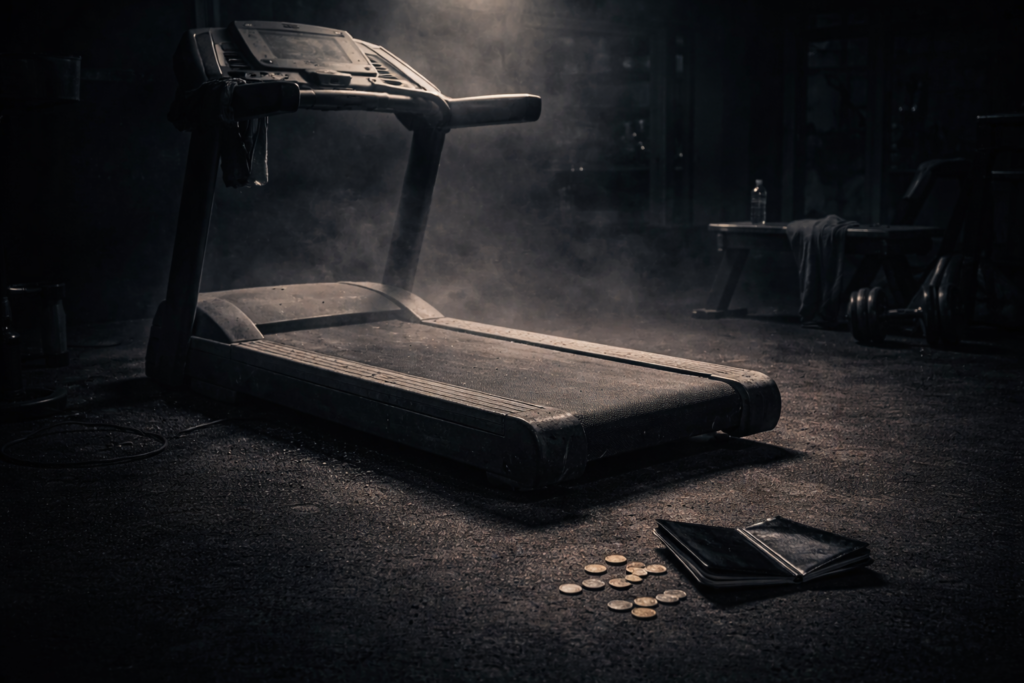
Five years later, differences may begin to appear. The one who trains is more likely to maintain consistent routines, manage stress under pressure and is less intimidated by long term projects. The other may switch directions more often, abandon slow return efforts and seek quicker rewards. These are not personality differences at birth, just they are behavioural patterns reinforced over time.
There is data supporting part of this dynamic. Studies consistently show correlations between regular exercise and higher levels of self regulation and executive function. Executive function includes impulse control, long term planning and the ability to delay gratification. They are directly linked to financial behaviour, career persistence and investment decisions.
This does not prove that exercise causes wealth, but it suggests that the habits built through physical discipline overlap with the habits required for economic progress.
Sedentary comfort and tolerance for uncertainty
A sedentary lifestyle can slowly reduce our tolerance for uncertainty. When daily life becomes too comfortable and predictable, we get used to stability and immediate results. Even normal levels of unpredictability can start to feel overwhelming.
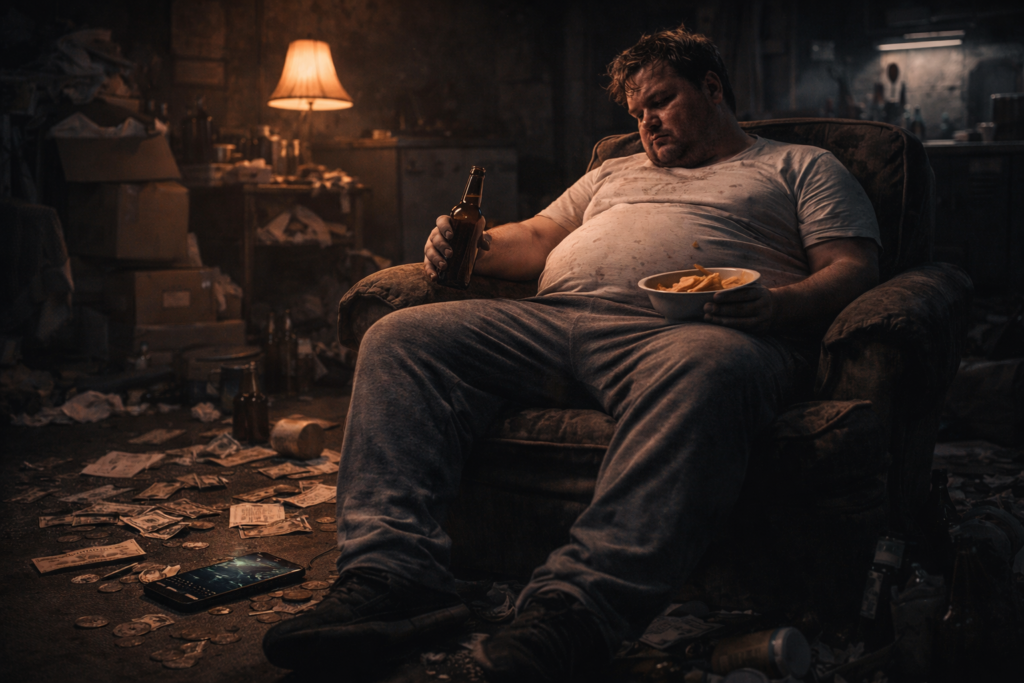
Economic life does not work that way. Career progress and financial growth involve risk and delayed outcomes. If we are not used to manageable discomfort, stepping into uncertainty feels harder, and ambition can quietly lose strength.
Physical training introduces controlled stress. You voluntarily enter discomfort, adapt and recover. That repeated exposure increases tolerance not only for physical strain but for temporary instability. In contrast, a fully sedentary life combined with constant digital stimulation may narrow the comfort zone.
Instant dopamine and financial impulsivity
There is another layer linked to digital behaviour. Many digital platforms are designed around immediate feedback. Notifications, likes, short videos and instant purchases stimulate fast reward cycles. The brain adapts to frequent small bursts of satisfaction.
Financial discipline operates differently. Saving money feels neutral. Investing feels abstract. Building skills feels slow. These actions do not produce immediate emotional rewards. If someone becomes accustomed to constant stimulation, low-stimulation activities such as budgeting, studying or strategic planning can feel disproportionately dull.

Research in behavioural economics shows that people systematically discount future rewards in favour of immediate ones. This tendency is known as temporal discounting. While it is a universal human trait, environments can amplify it. An ecosystem built around instant gratification strengthens short term bias.
Regular physical training can counterbalance that bias. It is repetitive. It is not always exciting. It teaches the brain to operate without constant reward signals.
The broader implication
None of this suggests that economic inequality is explained by gym attendance. Structural forces remain powerful. Education, access to capital, family background and public policy matter enormously.
However, within those structures, behaviour plays a role. The ability to tolerate discomfort and persist without immediate reward increases the chances of long term progress. The real question is whether a life built around comfort is quietly reducing those traits more than we realise.
Reclaiming Discomfort
This is not an argument for romanticizing struggle or rejecting modern comfort. Technology has improved life in meaningful ways. The point is simpler: a completely frictionless existence may carry hidden behavioural costs.
It is also important to acknowledge the privilege of choice. For many people, physical exhaustion is not optional. This reflection is aimed at those whose daily survival no longer requires sustained effort. When effort becomes optional, endurance stops being automatic.

The takeaway is not that everyone must train harder. It is that, in an environment engineered to remove friction, voluntarily choosing manageable effort becomes a way of preserving behavioural stability. Not for aesthetics, but for calibration.
What this produces is an “effort dividend”: the quiet confidence that you can tolerate boredom, delay reward and stay steady when outcomes are uncertain. These are not personality traits. They are maintained capacities.
The digital world is not the problem. But if comfort becomes the default in every domain, ambition and resilience may slowly thin out. In a world where effort is no longer required to survive, choosing it deliberately may become one of the last remaining ways to stay psychologically robust.
Fitness may not be our core expertise at Tekaroid, but exploring how systems change behaviour certainly is. If this theme interests you, you can find more articles, ideas and reflections in our sections on technology, finance and curious society, where we continue examining how modern structures influence our daily life.
