At Tekaroid, we often explore how ideas that promise progress change everyday life. Unlimited choice is one of those ideas. This article looks at how abundance, once seen as freedom, can slowly turn into mental fatigue.
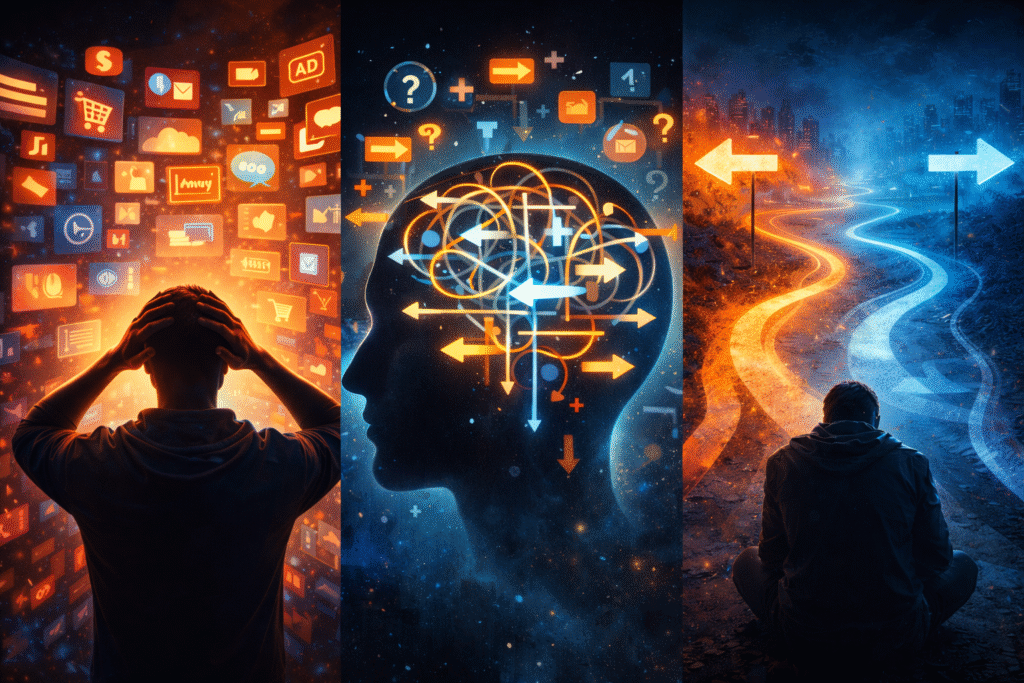
For most of modern history, freedom has been presented as expansion. More options, more paths, more identities to choose from, more ways to work, live and define success. Choice became the language of progress and a signal that society was moving forward.
If you could choose, you were free. If you could choose endlessly, you were told you were living in the most advanced moment in history. Yet something feels off. The promise remains, but the experience no longer matches it.
Despite being surrounded by possibilities, many people feel mentally drained. Decisions feel heavier than they should, satisfaction feels fragile and freedom often feels demanding rather than energising. The problem is not visible, but it is widely felt.
From scarcity to saturation
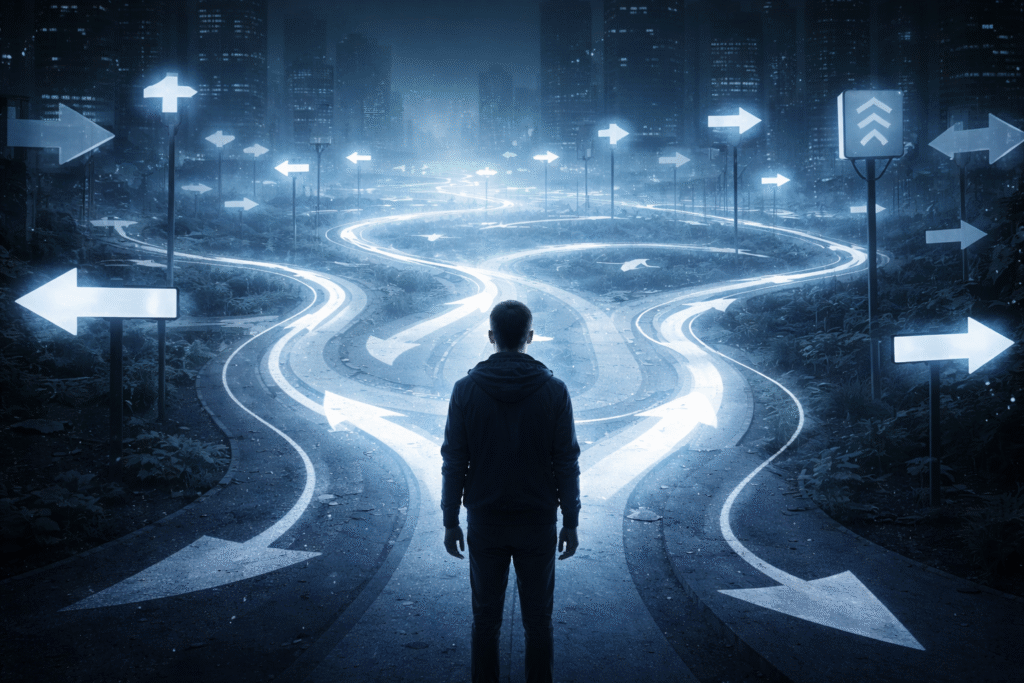
For most of human history, choice was limited by default. Where you were born largely determined what you did and how your life unfolded. Social roles were narrow but stable, offering little flexibility but also little need for constant evaluation. Life followed predictable structures. They were restrictive, but mentally manageable. People rarely had to question every aspect of who they were or what they should do next.
Modern society dismantled much of that structure. Industrialisation, education, mobility and later digital technology expanded the range of possible lives. People gained the ability to move, change professions and redesign their futures. This expansion was real progress. But it did not stop at what was enough. It accelerated toward saturation. Choice became continuous rather than occasional, and optionality became the default condition of life.
Careers are flexible, identities are fluid and lifestyles endlessly adjustable. Even values are treated as temporary configurations. Scarcity has been replaced by permanent possibility, and the human mind struggles to keep up.
When choosing never ends
Choice is not neutral. It consumes attention and energy. Every decision requires comparison, anticipation and emotional judgement, even when the stakes are low. When choices are limited and meaningful, this process feels empowering. When choices are constant and trivial, it becomes exhausting. Modern life turns decision making into background noise that never fully switches off.
What to eat, what to watch, how to work, how to rest and how to use time efficiently. Even moments meant for recovery are framed as decisions that must be made correctly. The mind rarely disengages. There is always another option waiting, another alternative asking for attention. The freedom to choose everything slowly removes the freedom to stop choosing.
The burden of responsibility
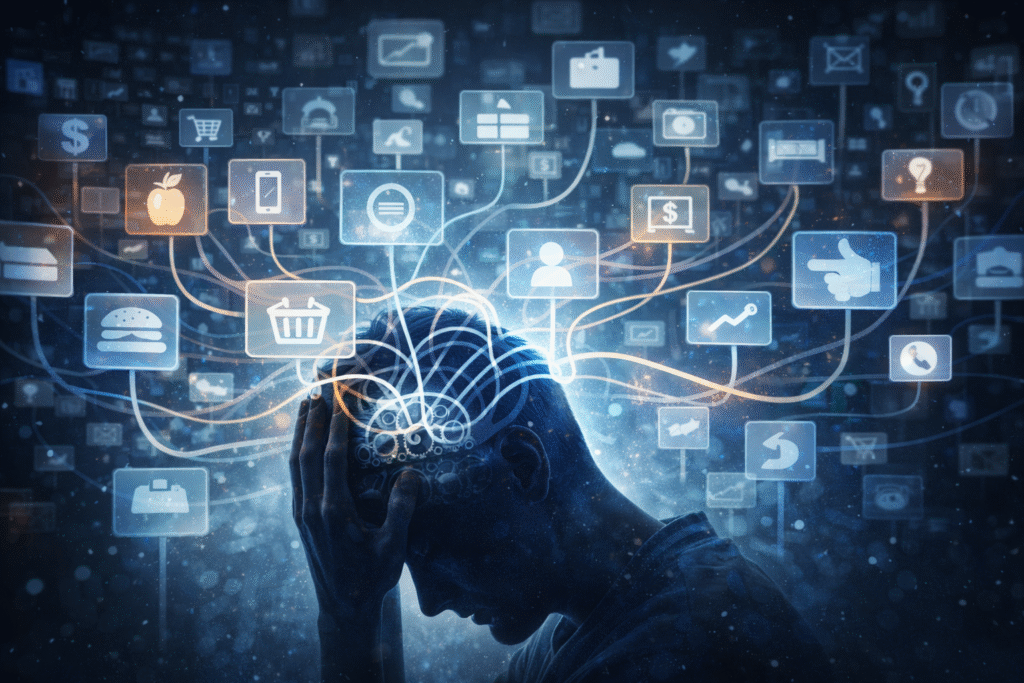
Unlimited choice quietly shifts responsibility inward. In a world full of options, outcomes feel personal. Success becomes proof of good decisions, while dissatisfaction feels like personal failure. If you are unhappy, the logic suggests that you must have chosen wrong. If something feels missing, perhaps you did not optimise enough. Structural explanations fade, and self evaluation moves to the centre.
Freedom becomes inseparable from self scrutiny. People are not only tired from living, they are tired of managing themselves as if life were a permanent optimisation project. Choice turns into an obligation to choose well. Rest becomes difficult when every part of life feels open to revision and improvement.
Choice and the illusion of control
Unlimited choice also feeds the illusion that life should be fully adjustable. When alternatives are everywhere, any discomfort feels like a signal to change direction. Change jobs, change routines, change cities, change identities. There is always another option waiting. Flexibility becomes the default response to friction.
This mindset can be useful, but it weakens tolerance for difficulty. Not every challenge is a mistake, and not every stagnant moment requires reinvention. Some forms of meaning emerge only through continuity. When everything is reversible, depth becomes harder to reach. Choice encourages experimentation, but it quietly discourages staying.
Technology as a choice multiplier
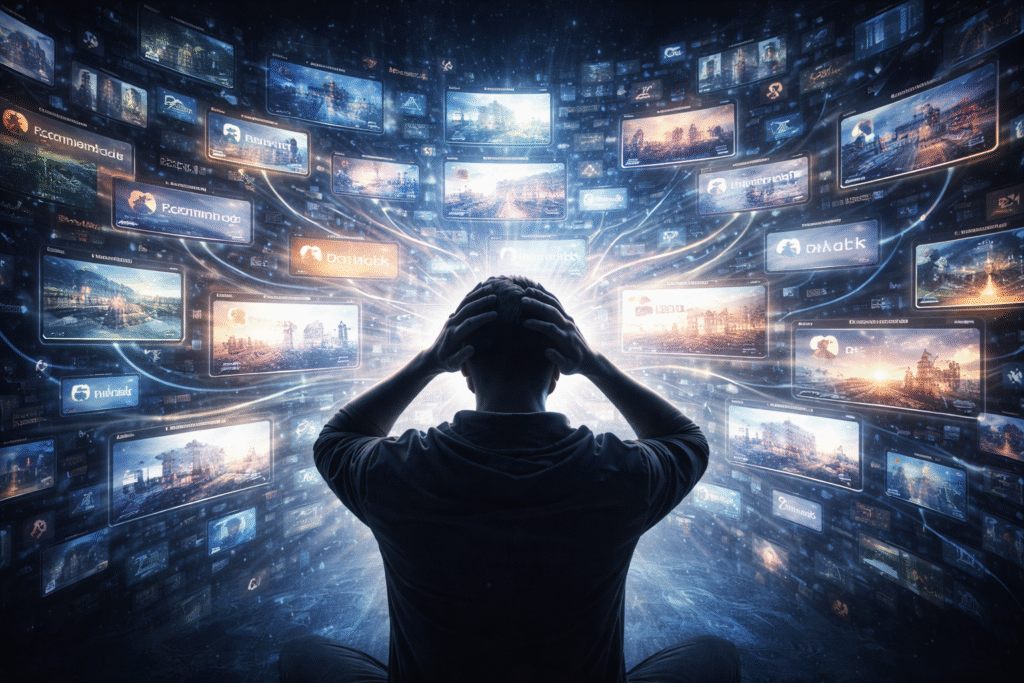
Digital technology did not create this dynamic, but it amplified it dramatically. Platforms are designed to multiply options, not reduce them. Algorithms constantly suggest alternatives. Better content, better matches and better versions of what you already chose. No decision is ever final.
This keeps the mind in a permanent state of comparison. Enjoyment becomes provisional and satisfaction feels temporary, as if it could be replaced at any moment. Technology promised efficiency and control. In practice, it often delivers complexity at scale, exposing the mind to more possibilities than it can meaningfully process.
The everyday symptoms of choice fatigue
The effects of unlimited choice rarely appear as dramatic crises. They surface quietly, embedded in everyday moments. People delay decisions they know are not important, yet feel mentally heavy. Choosing what to watch can take longer than watching itself. Simple plans feel surprisingly demanding.
There is also a background dissatisfaction that is hard to explain. Not because life is objectively bad, but because every choice carries the shadow of alternatives left unexplored. Enjoyment becomes conditional. It is good, but could it have been better. The exhaustion comes not from action, but from internal negotiation that never fully ends.
Another common pattern is decision avoidance disguised as flexibility. Keeping doors open feels safe, while committing feels risky. Over time, nothing fully begins, because nothing is ever fully chosen.
Why less can feel like more
Relief often appears when choice is reduced. Clear routines, defined roles and limited options are not necessarily restrictive. They reduce cognitive load and free attention from constant evaluation. Energy flows into experience rather than decision making.
Limits can be psychologically stabilising. This is not a rejection of freedom, but a recognition that structure makes freedom usable. Without boundaries, choice turns into noise. With them, it becomes manageable.
Reframing freedom
The problem is not choice itself. The problem is the belief that more choice is always better. When freedom is measured by volume, satisfaction becomes elusive. Abundance raises expectations faster than it delivers fulfilment. A more sustainable idea of freedom focuses on alignment rather than quantity. The ability to commit, to stay and to live according to values that hold over time. This reframing does not oppose progress. It simply recognises its psychological limits.
Unlimited choice turns life into a continuous interrogation. Am I doing the right thing, should I change again, is there something better waiting. These questions multiply until they dominate attention. Reducing choice does not eliminate uncertainty, but it quiets some of the noise, and that silence matters. A life does not need to be perfectly optimised to be meaningful. It needs to be livable.
At Tekaroid, we believe progress is not only about expanding possibilities. Sometimes it is about knowing when enough is enough. Freedom, paradoxically, may begin where choice ends.
