
Sad music seems like an unlikely source of comfort, yet many people turn to it precisely when emotions feel down. This article explores why sadness, when shaped by music, can feel unexpectedly soothing. At Tekaroid, we look at these contradictions to better understand how modern life shapes the way we feel.
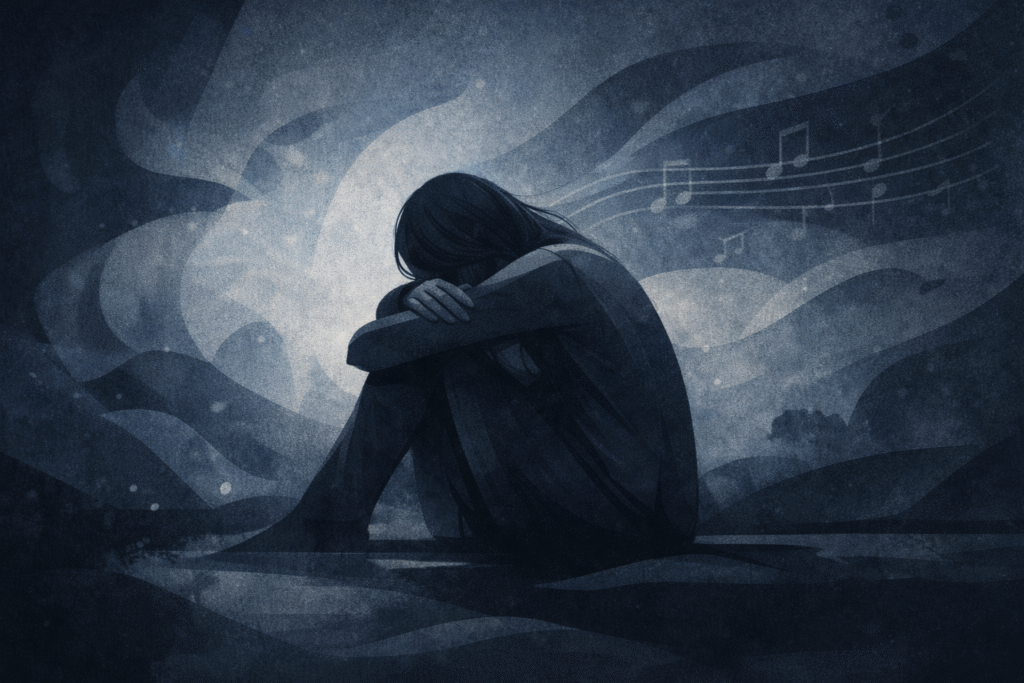
Few experiences are as quietly puzzling as the comfort people find in sad music. When life already feels heavy, it would seem logical to seek distraction, energy or optimism. Yet many people do the opposite. They turn toward melancholy sounds, slow melodies and lyrics filled with longing. This is not an accident of taste. It is a meaningful emotional choice.
Sad music does not work like other emotional stimuli. It does not simply reflect pain or amplify negative feelings. Instead, it creates a structured emotional space where sadness becomes intelligible rather than overwhelming. To understand why this feels comforting, it helps to look at how humans relate to emotion, control and meaning.
Sadness without real danger
One important factor is emotional safety. Sad music allows listeners to experience difficult feelings without real world risk. Unlike personal loss, conflict or failure, music carries no consequences. The listener chooses when to engage, how deeply to feel, and when to stop. This sense of control is crucial. The brain responds emotionally, but the body does not enter a state of alarm. Sadness is present, but danger is not.
Psychologists often describe this process as emotional simulation. The feeling is real, but the threat is absent. In this way, sad music becomes a training ground for emotion. It allows people to approach feelings they might otherwise avoid, to observe them, and to sit with them briefly without being consumed. What might feel unbearable in real life becomes manageable when framed by sound.

Feeling understood without explanation
Another reason sad music feels comforting is that it offers emotional recognition without social pressure. In everyday life, expressing sadness often triggers responses that aim to fix, minimise or reframe it. People are told to stay positive, move on or look at the bright side. Music does none of this. It does not interrupt or correct. It simply stays with the feeling.
When a song captures an emotion accurately, it can create a powerful sense of being understood. Not explained. Not analysed. Just recognised. This matters deeply in cultures where emotional expression is often rushed or treated as a problem to solve. Sad music becomes a form of silent companionship. It suggests that someone else has felt this too, and that the feeling itself is legitimate.
Memory, nostalgia and emotional meaning
Memory plays a central role in the comfort of sad music. Songs often attach themselves to specific periods, relationships or moments of transition. When revisited, they do not produce pure sadness but a layered emotional response that includes nostalgia, tenderness and reflection. This mixture can feel strangely reassuring.
Rather than trapping people in the past, sad music often helps contextualise it. It reminds listeners that emotions change, that pain belongs to a wider story, and that difficult moments were part of a longer journey. In this sense, sadness becomes meaningful rather than random. It gains a place within personal identity.

Emotional regulation, not indulgence
Contrary to common assumptions, listening to sad music does not usually deepen negative mood. For many people, it helps organise emotion rather than intensify it. Matching music to mood can slow racing thoughts, reduce inner conflict and create emotional coherence. Instead of fighting sadness, the listener aligns with it, which often makes it easier to process and eventually release.
This is not emotional indulgence. It is emotional alignment. Avoiding feelings entirely often gives them more power. Acknowledging them, even briefly, can reduce their intensity.
Why sadness often feels more beautiful
Sad music is frequently perceived as more beautiful or meaningful than upbeat alternatives. This may be because it tends to explore emotional complexity rather than simplicity. Slower tempos, minor keys and restrained arrangements invite attention rather than distraction. They encourage listening rather than consumption.
Cultural values reinforce this perception. Many societies associate sadness with depth, authenticity and seriousness. Happy music is often linked to entertainment or surface level pleasure. Sad music is allowed to be important, and this shapes how listeners engage with it.
Sad music as a pause in a noisy world
Modern life rarely allows emotional pauses. Everything moves quickly, demands reaction and rewards constant stimulation. Sad music often functions as a temporary suspension of that pace. Its slower rhythms and restrained energy create a psychological pause where nothing needs to be achieved or resolved.
This pause is not passive. It is reflective. It gives listeners space to notice what they feel without being pushed toward action. In a culture obsessed with progress, this kind of stillness becomes valuable. Sad music does not compete for attention. It holds it gently.

Choosing sadness as an act of self awareness
There is also something quietly intentional in choosing sad music. It suggests a willingness to face emotion rather than escape it. This choice often appears when people are emotionally aware enough to recognise what they need, even if that need is not comfort in the conventional sense.
Listening to sad music can be a way of saying that the feeling matters, that it deserves acknowledgment before moving on. In this way, sadness is not weakness. It becomes part of emotional literacy.
A rare space for emotional honesty
In a world that constantly promotes positivity, productivity and resilience, sad music offers something rare: emotional honesty without obligation. It does not promise improvement. It does not demand growth. It simply acknowledges that some emotions exist and deserve space.
At Tekaroid, we believe that modern life leaves little room for emotional complexity. Sad music quietly fills that gap. It does not remove pain, but it reshapes it into something understandable, shareable and momentarily lighter. Sometimes comfort does not come from feeling better. It comes from feeling accurately.
