
Inflation is one of those things everyone feels but almost no one experiences in the same way. You do not need to follow economic news to notice it. You notice it when the same routine expenses quietly demand more of your salary. At Tekaroid, we enjoy analysing things that often feel familiar but are rarely understood. So, let us take a closer look.

Inflation is often talked about as if it were a distant economic force, something abstract that only matters to experts. But the reality is different. Inflation is something people deal with in their daily lives, even if they do not think of it in those terms.
It shapes how far salaries stretch, how comfortable routines feel, and how secure the future seems. The difficulty is that inflation rarely announces itself clearly. It does not arrive with alarms or sudden shocks. It settles in gradually, altering expectations and habits before most people fully notice.
To understand inflation, it helps to step away from technical language and focus on how money actually behaves in real life.
What is inflation?
At its simplest level, inflation means that money loses part of its ability to buy things. Basically, over time, the same amount of money covers fewer goods and services than it used to.
This does not mean that money suddenly becomes worthless or that something has gone wrong overnight. Inflation usually works slowly. Prices rise little by little, often quietly, until the change becomes noticeable in everyday life.
It is important to understand what inflation is not. Inflation is not the same as a single price increase. If food becomes more expensive because of a poor harvest, that is not inflation. If a company raises prices because its product is popular, that is not inflation either. Inflation appears when many prices across the economy rise together and continue doing so over time.
This is why inflation affects daily life in such a broad way. It does not focus on one product or one sector. It spreads. Housing, food, transport and energy tend to move together, gradually reshaping what people can afford without any dramatic moment marking the change.
When inflation is low and stable, people adapt almost without thinking. Small increases feel manageable. When inflation accelerates, adaptation becomes harder. Expenses rise faster than expectations adjust, and everyday routines begin to feel tighter. Inflation stops being background noise and becomes a constant presence.

Why inflation exists at all
A common question is why inflation exists and why do prices not simply stay the same?
The short answer is that economies are not static. Populations grow. Technologies change. Resources shift. Inflation is partly a reflection of constant movement.
When an economy grows, people earn more, spend more and demand more. If production keeps up, prices remain stable. If it does not, prices rise.
But inflation is not only driven by growth. It also appears during disruption. Supply chains break. Energy becomes expensive. Labour becomes scarce. Even if demand stays modest, prices can still rise because producing anything costs more.
Why inflation hits so hard?
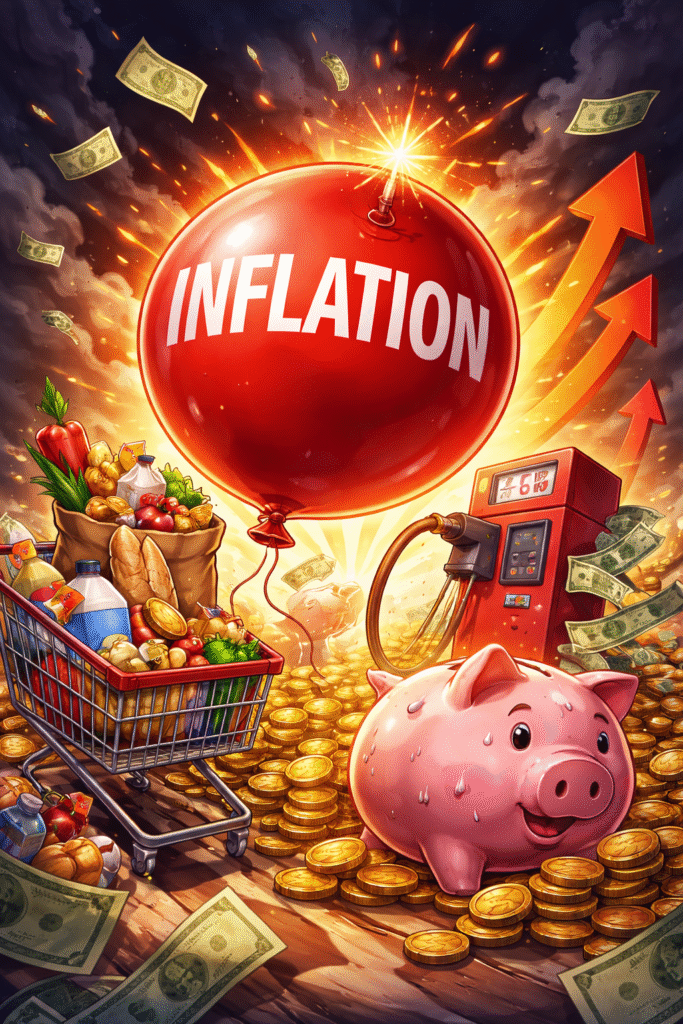
Inflation feels personal because it shows up where people have the least room to adapt. It does not start with luxuries or optional spending, but with basics like housing, food, transport and energy. These are costs that cannot be skipped, so when they rise together, inflation becomes impossible to ignore.
What makes it harder is timing. Prices react quickly, while wages move slowly. Even when salaries eventually rise, they often arrive after months of higher costs. That gap creates a steady sense of pressure, where people work just as hard but feel they are slowly falling behind. Inflation rarely feels like change. It feels like constant strain.
Measuring inflation versus living it
Inflation is usually measured using baskets of goods and services. These baskets are designed to represent average spending patterns. The problem is that no one lives an average life.
Some households spend far more on rent. Others spend more on transport or energy. When inflation concentrates in unavoidable expenses, official figures can feel disconnected from reality.
This is why people often say inflation feels worse than reported. The data may be accurate, but it does not always reflect individual experience.
The psychology behind rising prices
One of the least understood aspects of inflation is how strongly it depends on expectations. If businesses believe costs will rise, they adjust prices earlier. If workers expect prices to rise, they ask for higher wages. If consumers expect prices to keep rising, they buy sooner rather than later. None of this requires bad intentions. It is rational behaviour under uncertainty.
Over time, these shared expectations start to shape reality itself. Prices rise not only because costs changed, but because everyone prepares for higher prices ahead.
Once that mindset settles in, slowing inflation becomes far more difficult than stopping the original shock.

How inflation control actually works
From the outside, inflation control often looks simpler than it really is. Prices rise, authorities try to react as soon as possible, and people expect things to return to normal. But inflation is not a single problem with a single solution. It comes from how money circulates, how people use it, and what they believe the future will look like.
When inflation rises, governments and central banks cannot directly tell prices to go down. What they can do is change the environment in which prices are set. The idea is to reduce the pressure that keeps pushing prices upward, not to force them down artificially.
This is why inflation control takes time. Decisions made at the top of the system take months to filter into everyday life. By the time people notice a difference, inflation has usually been part of the economy for a while. This delay often creates the impression that nothing is working, even when changes are already underway.
Understanding this helps explain why inflation rarely stops suddenly. It fades gradually, as behaviour slowly adjusts.
Why controlling inflation never feels like relief
Lowering inflation usually involves asking the economy to slow down. This is uncomfortable because it affects areas people depend on every day.
When spending and borrowing are reduced, activity cools across the economy. This does not feel like a targeted solution. It feels general. People notice it in tighter budgets, more cautious decisions and a sense that opportunities are harder to reach.
The difficulty is that inflation itself is already painful. So the process of controlling it adds another layer of strain before any relief arrives. This creates frustration and fatigue, especially when households are already under pressure.
This is why inflation control is often criticised from all sides. Some feel it comes too late. Others feel it goes too far. In reality, it is a balancing act with no comfortable position.
Why inflation does not vanish when the numbers improve
Another source of confusion is the way inflation is reported. When headlines say inflation is falling, many people expect prices to fall as well. When that does not happen, trust in the official messages weakens.
The reason is that inflation measures how fast prices are rising, not whether prices are high or low. When inflation slows, prices usually keep rising, just at a gentler pace. The higher cost of living remains.
For everyday life, this distinction matters. A period of high inflation permanently shifts expenses upward. Even when stability returns, people still feel the impact of what already happened.
This explains why inflation often leaves a lasting mark. The pressure eases, but the adjustment never fully disappears.

Inflation, confidence and long term stability
At its core, inflation is closely tied to confidence. When people believe prices will remain broadly stable, they plan ahead with less anxiety. They make long term commitments without constantly second guessing their decisions.
When inflation becomes unpredictable, that confidence erodes. People shorten their horizons. Saving feels uncertain. Planning becomes cautious.
This loss of confidence affects the economy beyond prices. It changes behaviour, relationships and expectations. Over time, these changes can slow growth and reduce resilience.
This is why managing inflation is not only about controlling costs, but about maintaining trust in money itself.
Living with inflation rather than feeling powerless
Inflation is often described as something that should not exist. In reality, moderate inflation is a feature of modern economies, not a malfunction. Problems arise when inflation accelerates too quickly or becomes difficult to predict.
Understanding inflation does not remove its effects, but it does remove confusion. It helps explain why prices rise unevenly, why relief takes time, and why simple solutions rarely work.
For individuals, inflation feels deeply personal. For the economy, it is structural. Seeing both perspectives together makes inflation easier to live with, even when it remains uncomfortable.
Inflation may never disappear completely. But understanding it turns it from an invisible pressure into something that can be anticipated, understood and mentally managed.
Making sense of inflation in everyday life
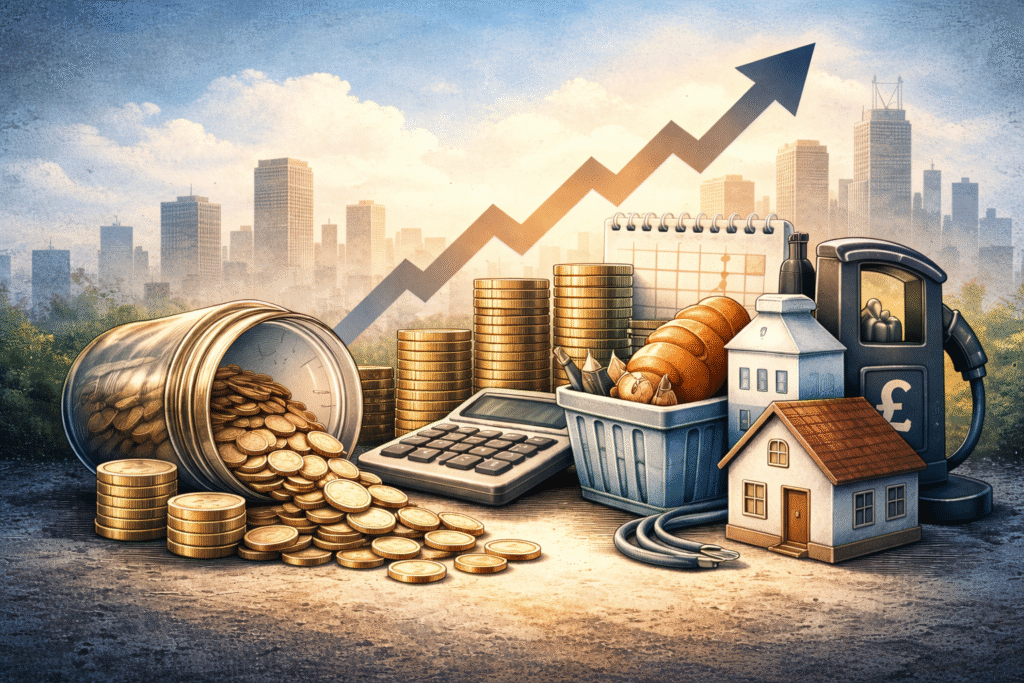
Inflation is often presented as a technical issue, but its real impact is lived, not calculated. It affects how secure people feel, how confidently they plan, and how much trust they place in money itself.
Throughout this article, inflation appears not as a single cause or a single failure, but as a process shaped by growth, disruption, expectations and behaviour. It explains why prices rise unevenly, why relief takes time, and why controlling inflation is never simple or painless.
Understanding inflation does not remove its effects. It does something quieter and more useful. It replaces confusion with context. It explains why life can feel more expensive even when nothing obvious has changed, and why economic stability depends as much on trust as it does on numbers.
At Tekaroid, we believe that economic ideas matter most when they help people make sense of the world they live in. Inflation is one of those forces that quietly shapes everyday life. Understanding it does not make it disappear, but it does make it easier to live with. We may not control inflation, but understanding it is one of the few ways to avoid feeling completely powerless.
