
At Tekaroid, we like to analyse the economy from a different perspective. In this article, we try to uncover a hidden truth, with one conclusion: being poor is not about earning more or less, it is about paying more for the same things.

Let us start with a simple example: Two people walk into a store to buy the same fridge. One pays the full amount, and the other chooses to pay in monthly instalments. When the second person finishes paying, the total cost, including interest, is significantly higher. Not because the product has changed or is worst, is not because the price is different, basically, because access to cash is different.
That small gap repeats itself everywhere. Poverty is commonly framed as a lack of income, but in reality it often operates as a system of higher costs, where credit, energy, flexibility and even urgency come at a premium, and where those differences accumulate over time. Being poor is expensive, not just in theory.
The cost of credit
In modern financial systems, a higher credit score usually unlocks lower interest rates, better borrowing terms and easier approvals. Lower scores, often shaped by irregular income or past missed payments, produce the opposite effect: higher costs, shorter repayment windows and restricted access to financial products.
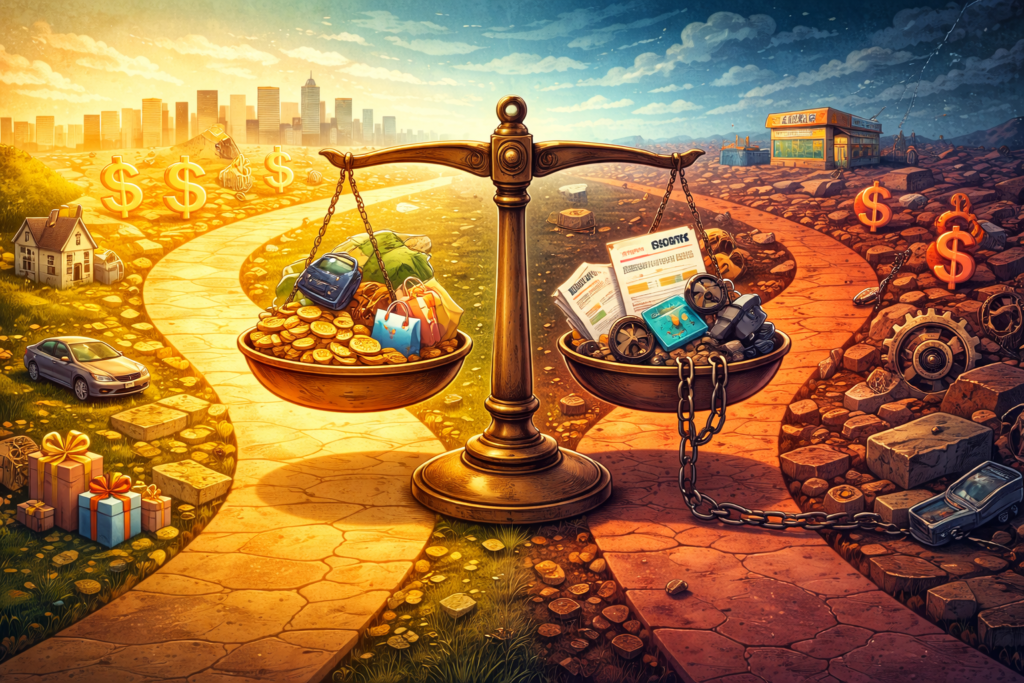
It is rarely about one person making a bad decision. The system runs on numbers, and those numbers determine how expensive money becomes. When someone is considered riskier, borrowing costs more and the conditions tighten. The logic sounds neutral enough, but the higher cost itself adds pressure, and that pressure makes stability harder to recover.
This creates a quiet cycle in which financial strain feeds on itself. The more fragile a situation becomes, the more expensive it is to fix, and the harder it is to rebuild breathing space. What looks like simple pricing logic on paper can feel very different in real life, where setbacks are not permanent traits but moments people are trying to move beyond.
The economics of urgency
There is something uncomfortable about this reality, and most people feel it before they can explain it. When you do not have money, everything seems to cost more. Not in an obvious way, not because there is a visible poverty tax written into contracts, but in small repeated differences that slowly add up over time.

To understand this point we need to see some examples of prices that can change depending of how somebody manage to pay. Energy on prepaid meters is often more expensive than paying by direct debit. Buying small quantities costs more per unit than buying in bulk. Renting can cost more each month than what a homeowner pays on a mortgage for a similar property. The system rewards stability and long term commitment. It penalises the need for flexibility, and flexibility is often what low income forces you to choose.
The difference also appears in places people rarely think about. For example, many car rental companies require the security deposit to be paid with a credit card. If you only have a debit card, you may be asked to leave a much larger deposit, or in some cases you may not be able to rent the vehicle at all.
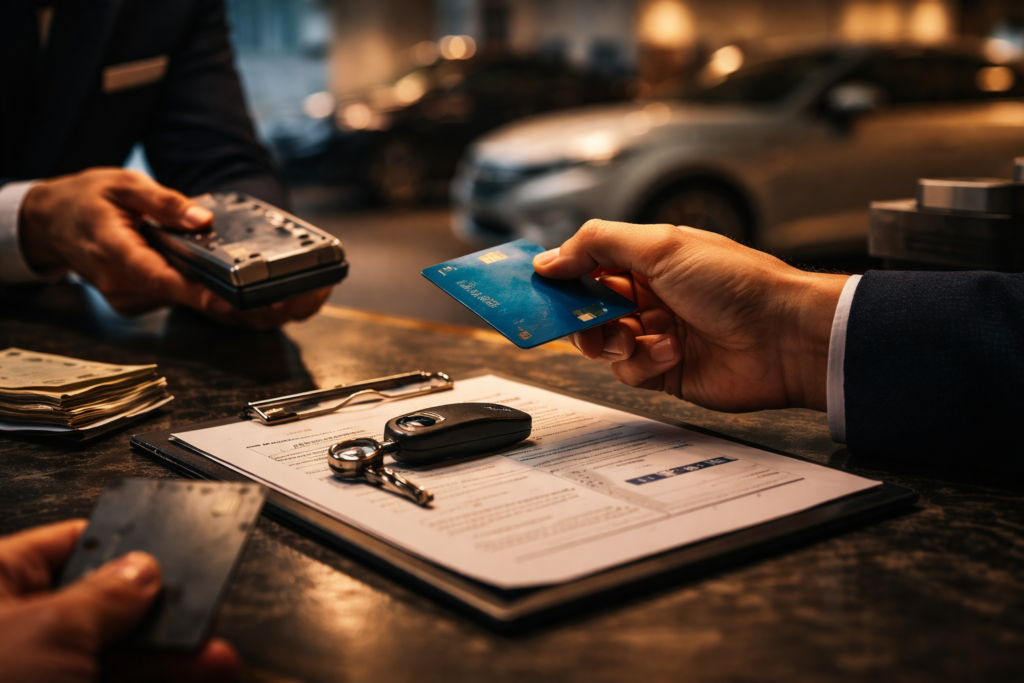
The assumption is simple: a credit card signals financial backing and access to credit, but a debit card signals limited protection for the company. The result is that the person with access to credit often faces fewer barriers and less upfront cost.
Something similar happens with online bookings: Credit cards often come with stronger consumer protection, easier dispute mechanisms and sometimes included insurance coverage. Certain travel companies offer better conditions, lower deposits or more flexible cancellation policies if you pay with credit.
The product is the same room, the same flight, the same rental car, but the conditions improve when you can demonstrate access to credit.
Even everyday spending reflects this pattern. Many credit cards offer cashback, reward points or travel benefits. Debit cards rarely do. Someone paying with credit and clearing the balance monthly can accumulate financial advantages. Someone who cannot access credit does not.
These differences are rarely dramatic on their own. But repeated across energy, transport, travel, retail and credit, they form a quiet pattern. Access to credit does not just increase spending power, it is helpful and have some advantages.
When you cannot afford to plan
If you live close to the edge, every surprise becomes a small crisis. A broken phone, a delayed payment, or for example, a car repair. Each one demands a quick solution, and quick solutions rarely come with the best financial terms. Living like this is mentally exhausting because you are constantly calculating, adjusting and worrying about what might happen next week.
If your finances are stable, you can compare prices calmly, wait for discounts, replace things before they break and absorb unexpected expenses without panic. That margin changes the way decisions are made.
Lower income often leads to weaker financial history, and a weaker history leads to higher interest rates. Higher interest rates increase monthly payments, leaving less room to save. With little or no savings, any unexpected expense pushes someone back into borrowing again, often under worse conditions. It is a loop that feeds itself.
Stress, health and performance
There is also a human cost that rarely appears in financial spreadsheets. Money stress affects everything in this life, like for example concentration, emotions or sleep. Basically, the essential conditions for functioning well each day. When someone is worried about paying bills, the body often remains in a state of alert, which drains energy and reduces performance at work and in social life.

If stress reduces focus at work, limits energy for side projects or weakens confidence in negotiations, it quietly influences earning potential.
The complex truth
It would be easy to end this article by declaring the system unfair. It would also be easy to defend it completely and say that markets simply price risk and that businesses are free to set the conditions they consider reasonable. The truth sits somewhere more complex.
A car rental company can decide that it feels safer accepting a credit card than a debit card. A bank can charge higher interest if it believes the probability of default is greater. An energy provider can offer discounts to those who commit long term. None of these decisions, taken individually, are irrational. In most cases, they are responses to risk, cost and incentive structures. Every business has the right to protect itself and define its payment conditions.

At that point, we are no longer talking about a single policy or a single business choice. We are looking at a pattern. Markets are not designed to be moral. They are designed to allocate risk and capital.
What really matters is understanding what this adds up to over time. No single rule looks dramatic on its own. A slightly higher deposit here, a slightly higher interest rate there, fewer benefits in certain payments. Each one seems small. But when the same person keeps facing those small disadvantages again and again, the difference becomes visible.
For more analysis like this one, visit our Finance center
