
You have definitely heard of it. The term sounds powerful, almost mythical, yet strangely imprecise. Is it a city? A company? A closed circle of geniuses shaping the future from behind glass walls? Let us break it down carefully. At Tekaroid, we have prepared an insightful analysis.
Silicon Valley is often mentioned as if everyone already understands what it is. The name appears in headlines, business conversations and tech debates, usually surrounded by myths. But behind the label is not a single city or a mysterious elite. It is a specific region, shaped by history, money, universities and risk, that quietly influences how technology is built and how it enters everyday life. Understanding why Silicon Valley formed where it did, and how it actually works, helps explain why so many tools we use daily come from the same small part of the world.

A real place, with a real name
Silicon Valley is a real place, and it sits firmly in the California, on the west coast of the United States. More precisely, most of what we call Silicon Valley overlaps with Santa Clara County.
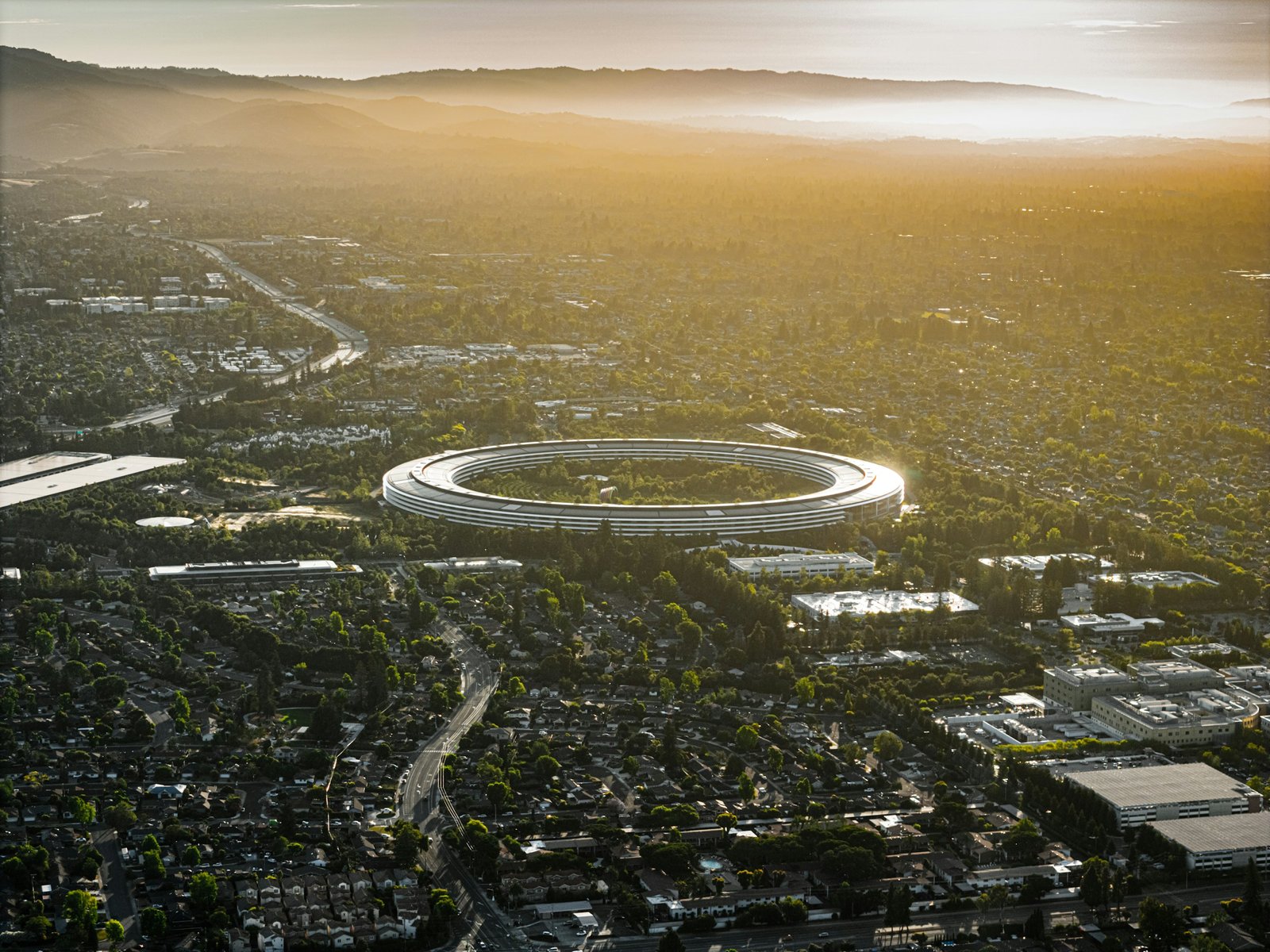
This is important, because Silicon Valley is not one city. It is a collection of relatively small cities, many with populations of only tens or a few hundreds of thousands of people. Places like Palo Alto, Mountain View, Cupertino or parts of San Jose are not megacities. They are closer to quiet, low-rise suburban environments than to dense urban centres.
If you drive south from San Francisco for about an hour, you will reach this area. You will not find a dramatic skyline or a large sign announcing that you have arrived. Instead, you will see office campuses hidden behind trees, residential neighbourhoods, coffee shops full of laptops, and housing prices that quietly signal how valuable this land has become.
Small cities, enormous economic power
Despite their modest size, the cities that make up Silicon Valley concentrate an extraordinary level of economic power. Many have populations counted in tens of thousands, yet their income levels rank among the highest in the world. Salaries in technology and related fields are exceptionally high, and per capita income far exceeds national and global averages. This concentration of wealth is not accidental or sudden. It is the cumulative result of decades of technological activity, company creation and sustained investment.
A relatively small number of people, working within a compact geographic area, produce technologies and platforms used by millions or even billions worldwide. Economic value is generated locally but projected globally. In simple terms, Silicon Valley shows how modern economic power no longer depends on large populations or heavy industry, but on the ability to create scalable systems that amplify the output of a small, highly specialised workforce.

Where the name really comes from
The name “Silicon Valley” dates back to 1971. Silicon is the material used to manufacture computer chips, and the region became home to some of the earliest companies producing electronic components and computer hardware.
Everything started not with social media or smartphones, but with companies focused on computer parts and electronics. These early firms laid the technical and professional foundations of the region. A journalist eventually referred to the area as Silicon Valley, and the label stuck.
What mattered most was not the technology alone, but the concentration it created. As chip and hardware companies multiplied, skills, experience and professional networks began to accumulate in the same area. That density turned a technical label into something broader. Silicon Valley no longer described what was made there, but how the region worked.

Why did everything concentrate there?
This is a important question, and the answer is not easy. First, the region benefited from early links between industry, research and education. Stanford University played a crucial role by encouraging collaboration between academia and business, rather than keeping them separate. Ideas could move quickly from research to real-world application.
Second, once a few successful companies appeared, talent followed. Skilled engineers and entrepreneurs moved to the area because that was where opportunities were. As more talent arrived, more companies formed. This created a cycle.
Third, investors learned that this environment produced results. Venture capital concentrated there, making it easier for new ideas to find funding. Once money, talent and knowledge were all in the same place, it became increasingly logical for new projects to start there as well.
Silicon Valley did not appear overnight. It slowly became the most efficient place in the world to turn technical ideas into businesses.
From hardware to global platforms
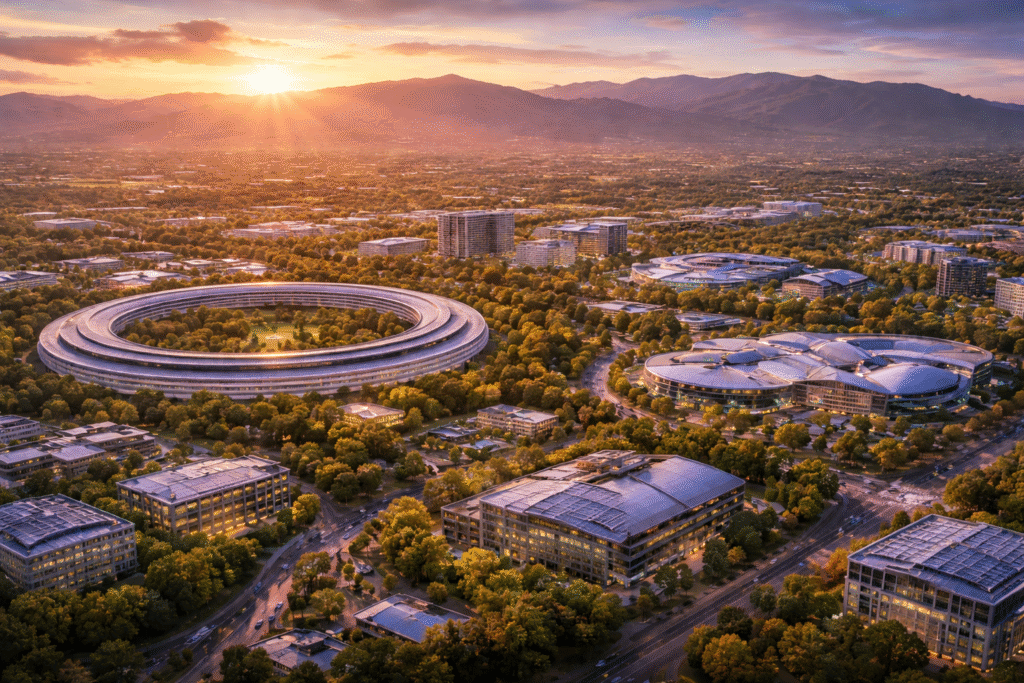
From this transition emerged some of the most influential companies of the modern era, including Apple, Facebook (now Meta) and YouTube. These companies were not isolated successes. They were products of an environment already accustomed to scaling technology quickly, attracting capital and turning technical ideas into modern tools.
What truly changed was the scale of impact. Hardware companies sold physical products to defined markets. Digital platforms, by contrast, expanded globally with very little friction. A service built in one small Californian city could reach millions of users within months. In doing so, these platforms moved beyond making tools and began shaping behaviour.
The result was a shift in identity: Silicon Valley was no longer just a regional technology hub, but a global force capable of influencing everyday life far beyond its geographic borders.

Startups as a consequence, not the origin
Silicon Valley is often described as “the place of startups”, but that description reverses the cause and the effect. Startups did not create Silicon Valley. They appeared because the conditions already made experimentation viable. Long before the word startup became fashionable, the region had accumulated capital, technical knowledge, legal flexibility and a culture that tolerated uncertainty.
What makes the area unusual is how safe it feels to try and fail. Venture capital investors actively look for risky ideas, fully aware that most of them will not work. That risk is built into the model. At the same time, experience is widely available. It is relatively easy to find people who have already launched products, scaled teams or navigated failure before. Knowledge is not rare, and it circulates quickly.
A failed company does not end a career. In many cases, it strengthens it. This dramatically lowers the personal cost of taking risks. When trying is affordable and failure is survivable, experimentation becomes normal. Startups multiply not because the region encourages optimism, but because it systematically removes fear.

The valley keeps running
Today, Silicon Valley operates through repetition rather than design. The same pattern plays out again and again. Ideas emerge in universities, move into small companies, attract funding, and either grow or disappear. There is little drama in the process. What matters is not any single outcome, but the fact that the cycle rarely stops.
Large companies provide stability and scale. Smaller teams move faster and take risks that established firms cannot. Investors expect losses and plan around them. Universities continue to send new people into the system. Each part knows its role. That quiet continuity is what allows Silicon Valley to keep producing new technologies long after earlier successes have faded.

Then, what is Silicon Valley?
Silicon Valley is not a magical location where ideas are better by default. It is a highly optimised environment designed to reduce the distance between an idea and its impact on the world.
It happens to sit in Santa Clara County, in California, and it happens to be made up of relatively small cities. But its importance comes from how effectively it concentrates people, capital and knowledge, and how it encourages them to interact.
That is why, every time you use a smartphone, scroll a social platform, search the web or watch online video, you are likely interacting with something that originated in this narrow stretch of land.
Silicon Valley is not perfect. It produces innovation, inequality, progress and tension all at once. But understanding why everything gathered there helps explain a large part of how the modern world came to work the way it does.
Discover more in Tekaroid.
