At Tekaroid we have been rejected by enough automated hiring systems to understand how confusing the process can be. This experience made us curious about how these systems actually work, and hopefully it also helps you, whether you are hiring or being hired.
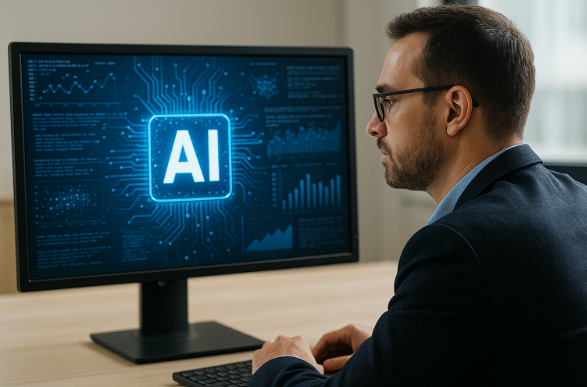
Companies are facing a big change in the way they hire future employees. Let’s see how companies use AI for recruitment, the technical problems behind these systems and the solutions that help make AI hiring more ethical and trustworthy. Businesses across different sectors now integrate AI for recruitment into their daily operations to identify talent more efficiently.
AI candidate filtering
When an applicant submits a CV today, is an automated system trained to interpret all the data and estimate how well someone fits a specific position. AI tries to understand relationships between previous experience and what the company is looking for, instead of reading the CV like a story, it reads it like a pattern.
Companies rely on this because it reduces the time spent filtering large volumes of applications. But the same qualities that make the process efficient also introduce new risks, especially when the algorithm misinterprets information or prioritises details that were never meant to be decisive.

AI-driven assessments
The second major use of AI in hiring is the evaluation of candidates through digital assessments. These platforms do more than score right or wrong answers. They observe behaviour throughout the test, like for example, the communication style or how they manage problems or pressure.
Some assessments include timed exercises, situational judgement scenarios that replicate real work challenges, other incorporate video or audio responses to analyse the candidate through tone or, the most difficult, to analyse the words used.
Companies adopt them because they create a structured way to compare applicants who might otherwise appear similar on paper. They also help uncover strengths that traditional CV-based screening might overlook, such as adaptability or analytical reasoning. Still, these advantages are meaningful only when the technology operates fairly.
Invisible bias
An AI system learns from examples. If the historical information it receives contains patterns that favour a certain profile, that can lead to a unfair recruitment process. The danger is that these tendencies often reflect old habits rather than actual job performance. Bias appears silently. The model may start giving more value to certain job titles or types of experience simply because previous hires shared them. Over time, these inclinations become stronger, even if they have nothing to do with true ability.
Confusing rejections
Another challenge is the lack of clarity surrounding this automatic decisions. Candidates often receive instant rejections without any explanation, leaving them wondering whether the issue was their skills, the formatting of their CV or something else entirely.
Recruiters, on the other hand, may only see the final ranking without understanding how it was produced. When a hiring tool cannot provide clear reasoning behind its choices, trust decreases on both sides of the process.

At Tekaroid, our view is simple: technology should make hiring smarter, not colder. Used wisely, AI can help companies build teams with more precision and less bias, but only if humans remain involved.
Fixing the system: Improving AI recruitment
Improving AI recruitment is not about adding more algorithms or making the system more complex. It is about understanding how decisions are produced and ensuring that those decisions reflect the values of the organisation.
Many companies adopt AI tools for the speed they offer. CVs get sorted faster, interview slots get filled quicker, and volume becomes less overwhelming. But speed without accountability is dangerous. Accountability means treating the AI model like any other part of the business: it requires periodic checks, testing under different conditions, transparent documentation and the willingness to intervene when something feels off.
This is not a one time setup. It is an ongoing process.

Bringing back the human element
Hiring is not just a technical process. Behind every CV is someone choosing a career direction, trying to make a living or looking for an opportunity to grow. When automated systems dominate the first stages of recruitment, candidates often feel reduced to a set of numerical scores. This disconnect can harm employer reputation more than companies realise.
Restoring the human element does not mean abandoning automation. It means giving applicants a point of contact they can rely on. Human involvement also improves decision quality. Recruiters can contextualise information that the algorithm cannot understand: career breaks, unconventional paths, international experience, personal obstacles or skills that do not fit neatly into predefined categories.
Hiring becomes stronger
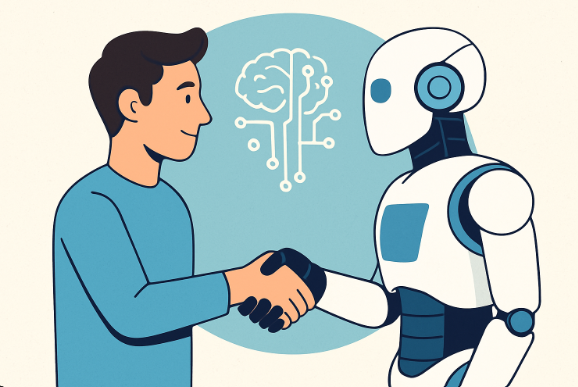
The goal is not to choose between automation and human judgement. It is to combine both in a way that enhances the strengths of each. A recruitment process that blends these two approaches becomes more efficient.
At Tekaroid we enjoy exploring new technologies as much as we enjoy using them. Innovation excites us, but we also recognise when a tool still needs human guidance. AI is powerful and moving fast, yet it has not completely reached the level of human judgement that makes decisions feel fair and intuitive. We are confident it will eventually get there. An algorithm may judge consistency, a human can judge potential.
